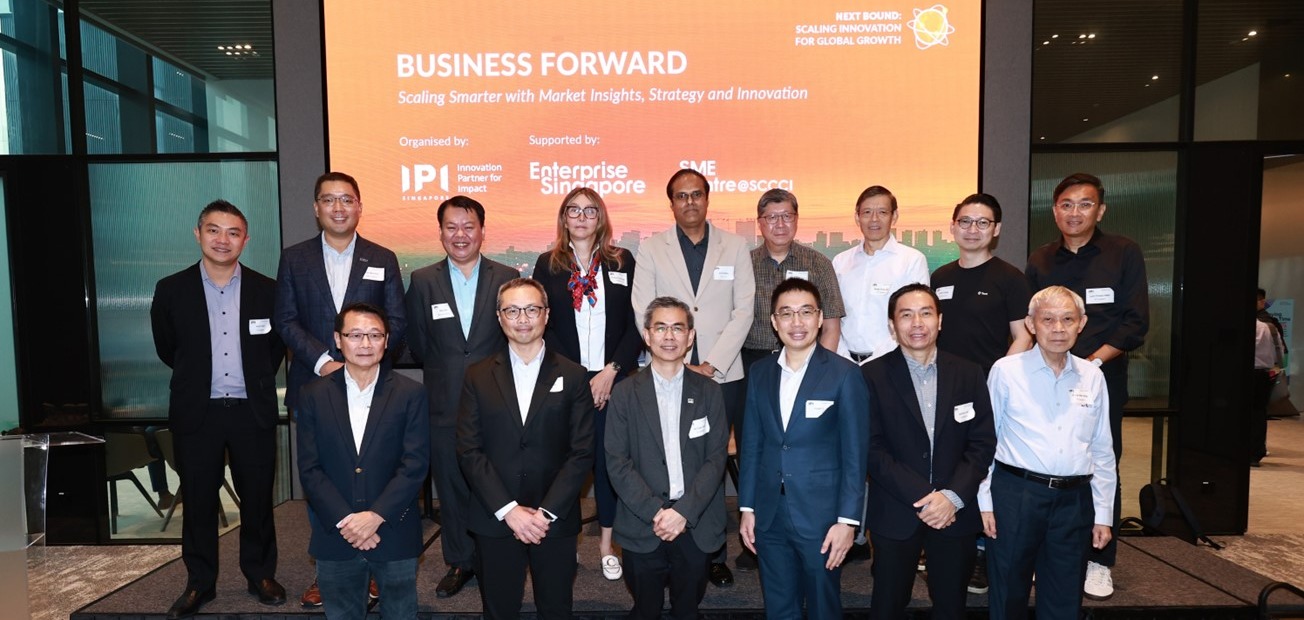
In today’s fast-changing global economy, scaling a business takes more than ambition – it calls for strategic clarity, adaptability, and the right partnerships. At IPI Singapore’s Business Forward event, held on 21 August 2025, close to 100 SMEs and innovation enablers gathered to explore what it truly takes to grow smarter. From strengthening internal operations and earning market trust, to expanding into new markets, the event unpacked practical strategies for building resilience and pursue growth amid global headwinds.
For many local small-and-medium-sized enterprises (SMEs), growth often means looking beyond Singapore’s borders. Yet breaking into international markets is rarely straightforward. It demands clear strategies, strong capabilities and guidance to navigate complex challenges.
Opening the event, Michael Goh, CEO of IPI Singapore, set the tone by acknowledging the realities SMEs face. He addressed these concerns directly: “As you transform your business, the journey is often filled with uncertainties. But you are not alone. You have a whole community here who can help.”
His message was a powerful reminder that innovation does not happen in silos. Behind every breakthrough are networks, partnerships and the willingness to share knowledge. As he later added, “Transformation is never easy, but with the right support and community, it becomes possible.”
With that, the stage was set for a deeper look at the global shifts shaping how SMEs must adapt.
Seeing the signals: market shifts and tech trends
Yap Wee Kee, Partner Audit of KPMG Singapore, delivered the keynote "Global Markets and Technological Trends & Insights" with a sharp focus on international market shifts and emerging technologies. Drawing on KPMG’s latest market intelligence, he outlined six major forces shaping the business environment, including artificial intelligence (AI), computing infrastructure, advanced connectivity, robotics, digital trust and quantum computing.
“AI is everywhere and is taking over many aspects of our lives. Every day, you’re already interacting with it, whether through WhatsApp, Google or ChatGPT,” he explained.
To show how these forces converge, Wee Kee pointed to the rise of dark factories - advanced manufacturing facilities that run around the clock with minimal human intervention. He further cited the example of Xiaomi’s “dark factory” in Beijing – a fully automated facility that can produce one smartphone every second to show how cutting-edge tech can reshape the entire industries.
“This is a glimpse of the future. Is it a surreal dream or a fantasy?” he mused. “It is already happening.”
While such a level of automation might seem distant for most SMEs, Wee Kee emphasised the underlying strategic principles of adapting early, planning ahead, and viewing technology as an investment rather than a cost. He underscored how technologies like AI, IoT, robotics and cybersecurity can work together to offset labour costs, boost efficiency and build resilience. However, Wee Kee also stressed a deeper issue: “Digital trust is fast becoming the currency of business. Without it, no amount of technology can win markets.”
Real-world voices from the SMEs
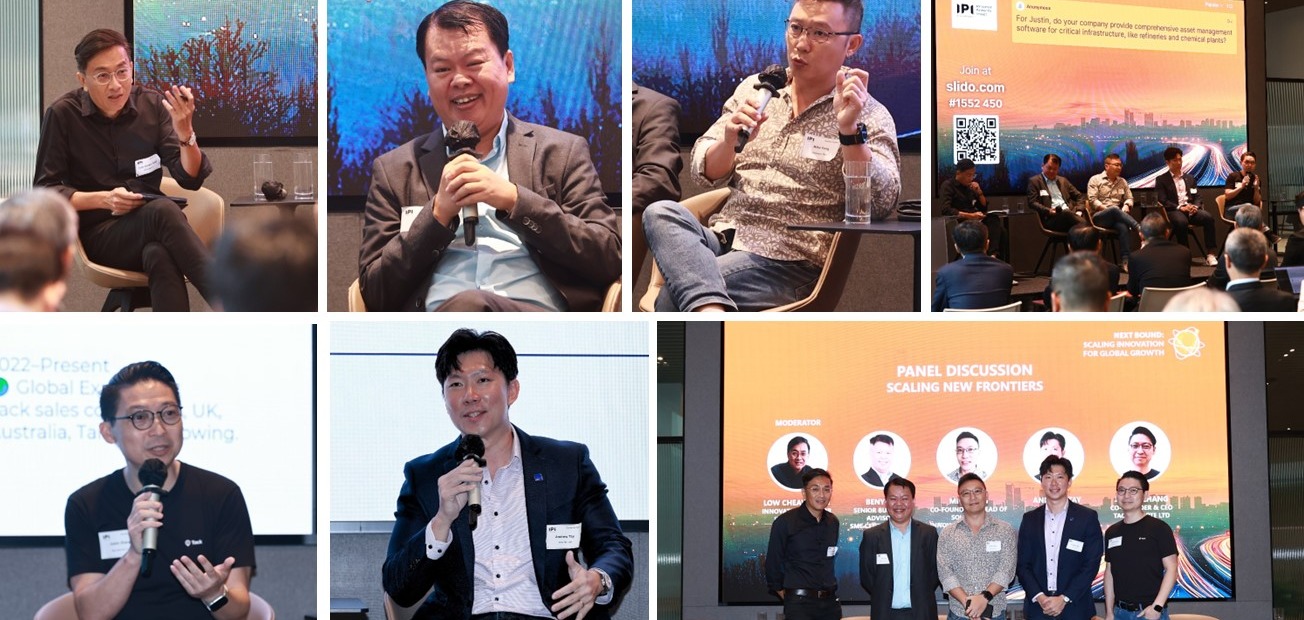
As Wee Kee’s keynote painted a global picture, the discussions shifted to regional realities and on-the-ground strategies. The panel "Scaling New Frontiers", moderated by
Low Cheaw Hwei, an Innovation Advisor of IPI Singapore, featured Beny Ke of SME Centre@SCCCI, Mike Feng of Innowave Tech, Andrew Tay of KGS and Justin Zhang of Tack One. Together, they offered their perspectives on what it takes to grow from navigating operational hurdles and business model pivots to entering new markets with limited resources. Their stories revealed a common truth: growth brings opportunity, but also risk, and the challenge for SMEs lies in taking bold steps and calculated risks without losing strategic clarity.
This theme carried into Beny’s keynote, "Navigating Global Waters: Assessing your Readiness for Internationalisation", where he urged SMEs to view internationalisation as a necessity for long-term survival. “SMEs that dare to take the leap abroad are often the ones that come back stronger,” he reminded the audience. “Internationalisation isn’t just about growth. It’s about survival in today’s competitive landscape.”
Yet, he also reminded businesses of the importance of staying rooted in their core identity. He emphasised that going global should not require a company to abandon its base but rather strengthen it by learning from different markets.
Together, the panel and keynote underscored that resilience comes not only from scaling up but also from forging the right partnerships, maintaining adaptability and ensuring that growth strategies are anchored in strong foundations.
Standards as a catalyst: building trust for global scale
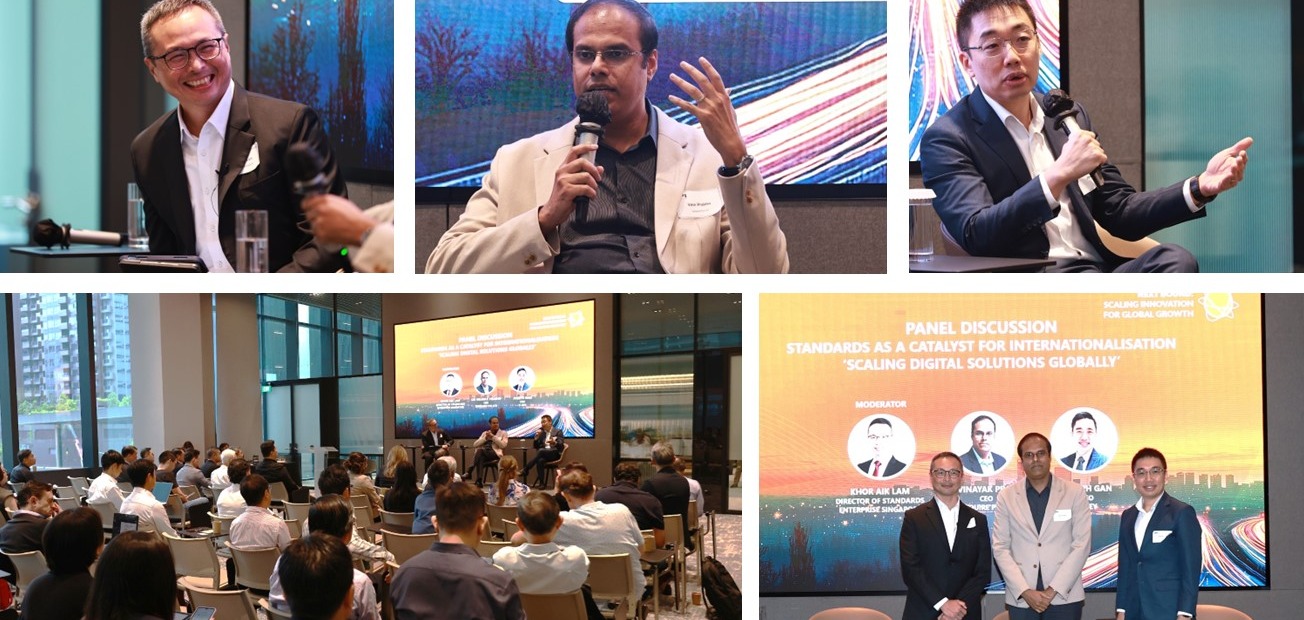
In the final panel, "Standards as a Catalyst for Internationalisation - Scaling Digital Solutions Globally", moderated by Khor Aik Lam, Director of Standards (Manufacturing) at Enterprise Singapore, the focus turned to a critical but often overlooked growth lever: standards and conformance. Panellists Dr Vinayak Prabhu of SynQor, and Joseph Gan of V-Key shared how aligning with international standards not only opened doors to new markets but also strengthened their competitive edge globally.
Both panellists highlighted that identifying the customer base is often the first step. Knowing which certifications matter most to your target markets allows SMEs to focus their resources effectively. Standards, they noted, also serve an internal purpose as integrating them early can streamline processes, strengthen governance and prevent costly rework down the line.
Beyond compliance, standards are about credibility and trust. In today’s interconnected markets, being standards-ready, whether in product quality, data security, operational resilience or sustainability, enables SMEs to earn market recognition, gain customer confidence and compete on equal footing with larger players.
Going forward from insights to action
The event closed with a clear and compelling message: uncertainty is inevitable, but it need not be a barrier. As the speakers and panellists demonstrated, uncertainty can be the force that pushes businesses to innovate, collaborate and take bold steps forward.
During the event, IPI Singapore has engaged about 20 companies through its 1-on-1 Innovation Advisory clinic. Many of these companies have since progressed to deeper advisory discussions or are exploring potential technology adoption opportunities. The strong response reflects the demand from SMEs seeking support in scaling their operations, entering new markets, and adopting industry standards.
SMEs need not navigate these challenges alone. Whether you are exploring new markets, building internal capabilities or navigating compliance, our Innovation Advisors and Tech Experts are ready to support your journey.
Reach out and discover how your company can scale with confidence and clarity.