Thin-Film Solar Glass for Building-Integrated Photovoltaics
KEY INFORMATION
Chemicals - Inorganic
TECHNOLOGY OVERVIEW
Conventional photovoltaic (PV) panels face key limitations in efficiency, design flexibility, and sustainability. Though widely adopted, crystalline silicon modules are heavy, visually intrusive, and perform poorly under shading or high-temperature conditions. Their installation is typically restricted to rooftops, limiting energy yield in space-constrained urban environments. Moreover, silicon-based PV manufacturing involves energy-intensive processes and carbon emissions that run counter to the goals of green construction.
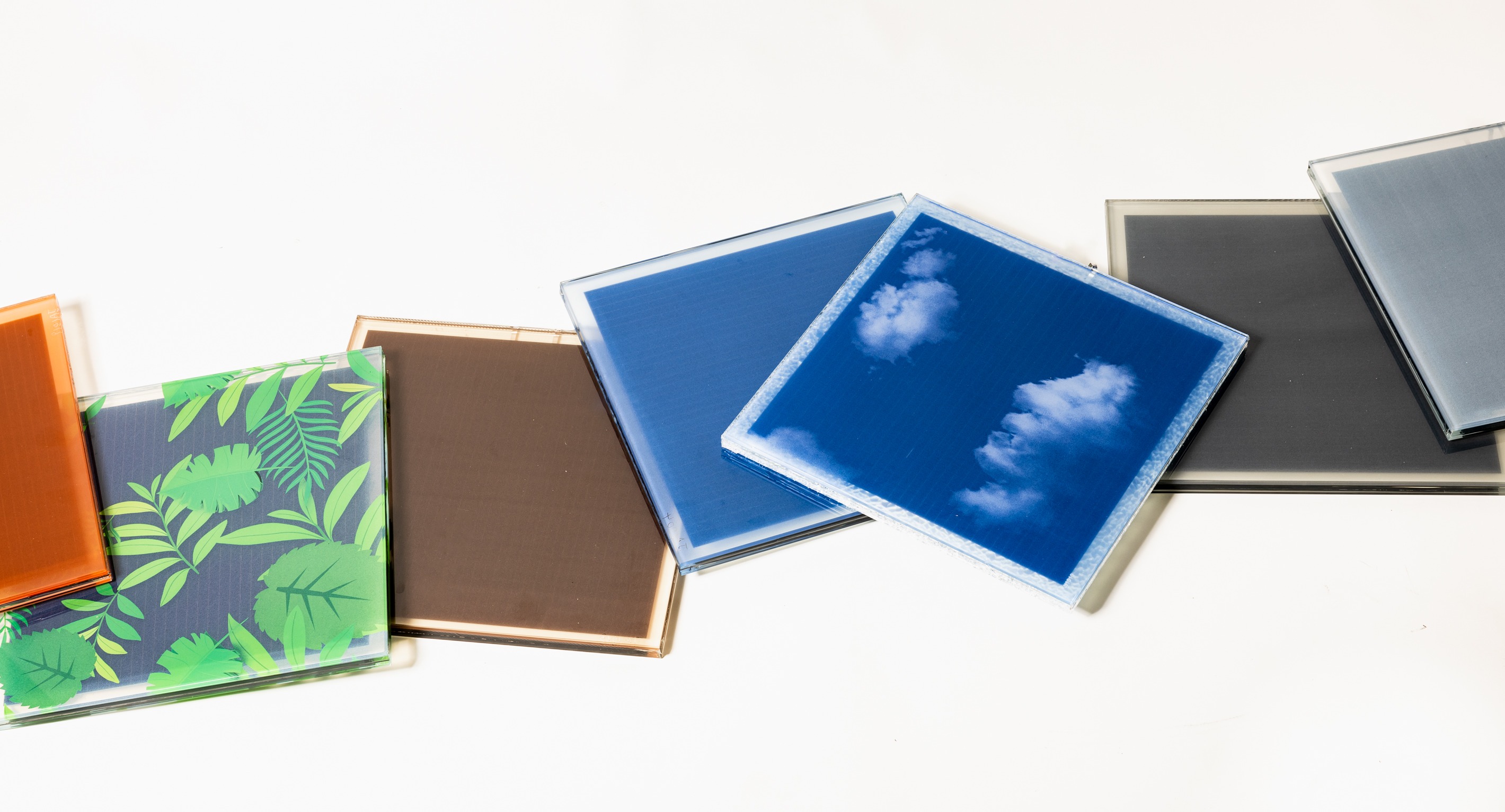
This thin-film cadmium telluride (CdTe) solar glass technology overcomes the limitations of conventional photovoltaics by integrating photovoltaic elements into glass for building-integrated photovoltaics (BIPV) applications. It effectively addresses high energy consumption and carbon emissions in modern buildings while maintaining architectural aesthetics. Achieving a conversion efficiency of 22.1% under laboratory conditions, the CdTe solar glass delivers outstanding low-light and temperature performance, ensuring reliable energy generation across diverse environments. The design is highly customizable for seamless integration with glass, stone, or aluminum façades—supporting applications such as curtain walls, sunshades, skylights, and other façade elements. By generating clean energy without compromising transparency or design versatility, the technology offers a practical pathway toward energy-efficient, low-carbon urban development, helping stakeholders meet green building and ESG objectives.
The technology owner is seeking collaboration with Singapore-based building material manufacturers, glass processors and architectural firms to jointly advance the integration of sustainable energy technologies into urban infrastructure, supporting Singapore’s transition toward low-carbon, energy-efficient buildings.
TECHNOLOGY FEATURES & SPECIFICATIONS
The technology features a thin-film CdTe photovoltaic layer combined with transparent conductive oxide and a glass substrate, creating an efficient photovoltaic glass module.
Key features of this PV solution include:
- Achieves conversion efficiency of 22.1% in laboratory conditions, with superior low-light performance and temperature coefficient
- Pollution-free production cycle – ensures low carbon emissions
- Highly durable as tempered glass
- Provides cooling, shading, and power generation functions
- Recyclable
- Customisable for aesthetic integration with glass, stone, or aluminum plates
- Suitable for applications like curtain walls, sunshades, and skylights
POTENTIAL APPLICATIONS
This technology applies to construction, infrastructure, and urban planning sectors. It can be used in commercial facades, residential balconies, agricultural greenhouses, airport structures, covered walkways, stations, and modern buildings. Additional uses include walkable solar tiles for flooring, LED-integrated glass for displays, sunshades, noise barriers, and smart city elements like solar-powered canopies or streetlight glazing. Products may encompass customized solar panels, prefabricated BIPV modules, or integrated energy systems for multifunctional power generation.
Unique Value Proposition
This thin-film CdTe solar glass outperforms traditional silicon-based panels with superior anti-shading, minimal hot spot risks, low inclination dependence, and frameless design for easy maintenance. It exhibits better performance under temperature and irradiance variations, with annual energy production up to 5% higher than c-Si equivalents. Degradation is low at -0.45% per year over 20 years. The technology's lightweight, durable structure, optimal bandgap for sunlight conversion, and recyclability provide lower lifecycle costs and enhanced sustainability, positioning it as a premier solution for energy-efficient building transformations.

Chilled Water and Condenser Filtration System Enhancing Efficiency & Water Quality
In-Pipe Hydropower Generation
Concrete Armour for Coastal Protection Structures
Multifunctional Multilayer Coating for Building and Photovoltaic (PV) Application
Transforming Agricultural Waste into High-Purity Silica and Carbon Materials
Digital Voltage Optimisation System for Electrical Energy Saving & Cost Reduction
Digital Solar Asset Management and Optimization Platform
Portable Electrostatic Evaporative Cooling Enhancer for Food & Pharma Cold Chains
Modular, Scalable and Cost-Effective Hybrid CO2 Capture Technology