Foveal Machine Vision Method and System for Enhanced Capsule Endoscopic Imaging
KEY INFORMATION
TECHNOLOGY OVERVIEW
The foveal machine vision method is a well-established human-eye-inspired technology that mimics the way our eyes focus on details in the centre of vision (the fovea) while keeping peripheral areas in lower resolution. The current invention applies this mature principle to capsule endoscopy and endoscopic imaging, and by integrating attention-driven imaging, adaptive radios, and visual–inertial fusion, it delivers a uniquely efficient and clinically relevant solution for fewer missed diagnoses and improved patient outcomes.
For clinicians: The system integrates seamlessly with existing PACS (Picture Archiving and Communication System) and EMR (Electronic Medical Record), requires minimal onboarding, and mirrors current reading habits. It streamlines the review process while ensuring clinicians retain full control by accepting or editing findings before making the final decision.
For patients: The exam remains outpatient and sedation-free, with no disruption to daily activity, while improved targeting and localization help reduce the need for repeat procedures.
This technology overcomes key limitations of current capsule endoscopy in gastrointestinal (GI) diagnostics — namely low image resolution (~500 X 500 pixels), slow frame rates (<5 frames per second), and excessive energy use — that can compromise lesion detection and often necessitate repeat procedures. Its innovative approach to endoscopic imaging ensures sharper visuals, better localisation, and enhanced clinical efficiency.
Ideal collaborators include R&D partners to advance development, gastroenterology departments for clinical validation, device manufacturers for capsule integration and scaling, and telemedicine providers to enable remote diagnostic deployment.
TECHNOLOGY FEATURES & SPECIFICATIONS
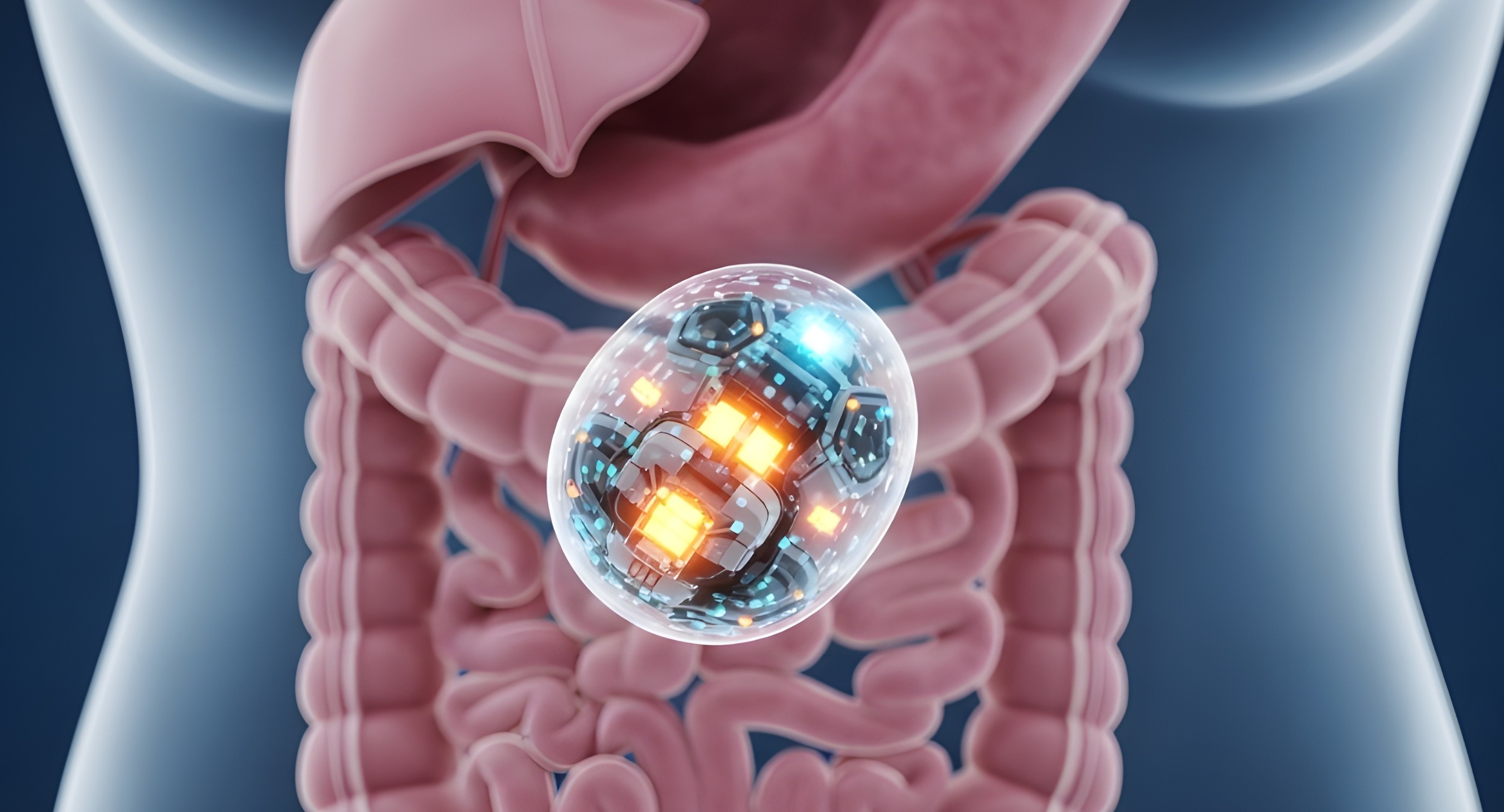
The system is a swallowable capsule endoscope with a high-resolution imaging sensor, real-time AI inference engine, and wireless transmission module. It operates in a continuous loop in two modes mimicking human visual attention:
- A routine low-power full-field scanning mode
- An intelligent focus mode: high-resolution, high-frame-rate, activated upon the detection of suspected abnormalities. The adaptive radio then transmits the additional data efficiently, while the server integrates video and inertial cues to estimate position, performs multi-class diagnosis, and generates a structured report with linked evidence.
The technology has already achieved successful laboratory validation of its key modules, including fast-switching imaging from full field to region of interest, robust wireless link and power control in benchtop and tank models, offline lesion detection on curated datasets, and visual–inertial localization on recorded trajectories.
The next step is to bring these proven capabilities together into a unified capsule form factor, advancing through ex vivo and simulated validation toward clinical translation. With a strategy that prioritizes high sensitivity for clinically relevant lesion classes, while ensuring acceptable precision and clear evidence trails, the platform is well-positioned to progress rapidly toward higher TRLs in collaboration with clinical partners.
POTENTIAL APPLICATIONS
This technology can be deployed in the healthcare diagnostics industry, particularly for gastrointestinal (GI) disease screening and monitoring. It is suitable for hospitals, endoscopy centres, and telemedicine services that require non-invasive and accurate diagnostic tools. Foreseeable applications include the early detection of obscure GI bleeding, polyps, and cancers.
Market Trends & Opportunities
The global capsule endoscopy market was valued at approximately USD 570 million in 2024 and is expected to reach USD 1.1 billion by 2032, growing at a CAGR of 8–9%. Growth is driven by the rising burden of gastrointestinal (GI) diseases and the demand for non-invasive, patient-friendly diagnostics. North America leads the market due to its advanced healthcare infrastructure, while Asia-Pacific — particularly China, India, and Singapore — is the fastest-growing region, supported by increasing healthcare investment and awareness. Key users include hospitals with GI departments, screening clinics, and telemedicine providers. The market favours solutions that deliver high image quality, AI-assisted analysis, and streamlined clinical integration — all of which align directly with this technology’s strengths.
Unique Value Proposition
The innovativeness of this technology lies in two areas:
- Advancing the traditional foveal machine vision method and system through both hardware and software improvements:
- Hardware: The imaging and compute path is designed to switch seamlessly between wide view and high detail while efficiently managing power and bandwidth within the capsule.
- Software: The system provides on-capsule detection and tracking, server-based triage and diagnosis, and a localization engine that fuses vision and inertial data into a reliable clinical map.
- Extending the established approach into capsule endoscopy, a field with limited prior use, by addressing existing limitations:
- Clinicians worry that selective imaging could miss important peripheral details. The system addresses this by continuously capturing full-field frames without turning the background off, while enhancing only clinically relevant regions. Sensitivity thresholds are set high, with every escalation logged for full auditability and reader confidence.
- Reviewing capsule endoscopy today requires clinicians to sift through tens of thousands of images, making the process slow and labour-intensive. The current system streamlines this by highlighting prioritized findings with key frames, confidence scores, timeline, and an auto-generated structured report. Early internal studies show it reduces review time significantly without sacrificing sensitivity.
Unlike fixed-resolution capsules, the current approach focuses high-resolution imaging where it matters, delivering up to tenfold greater lesion detail with efficient power use, plus precise localization, intelligent triage, and adaptive data transmission.

Micro-Vibration Enhanced Fiber Optic Sensing for Non-Invasive Vital Signs Monitoring
Non-invasive Blood Glucose Evaluation And Monitoring Technology
Assistive Communication Device for People With Speech Disabilities
Comprehensive AI Driven Platform for CT Coronary Angiography
Radio-Afterglow Nanoprobes For Early Diagnosis And Precision Treatment Of Cancer
AI-Powered Personal Medical Assistant Platform for Enhanced Patient Experience
AI-Powered Digital Health Platform for Active and Independent Ageing
HealthGrade: An Indicator for Health and Wealth
AI-Powered Autonomous Service Robot