Autocleaning of Earwax from Hearing Aid Receivers and Earmolds for Optimal Sound Clarity
KEY INFORMATION
TECHNOLOGY OVERVIEW
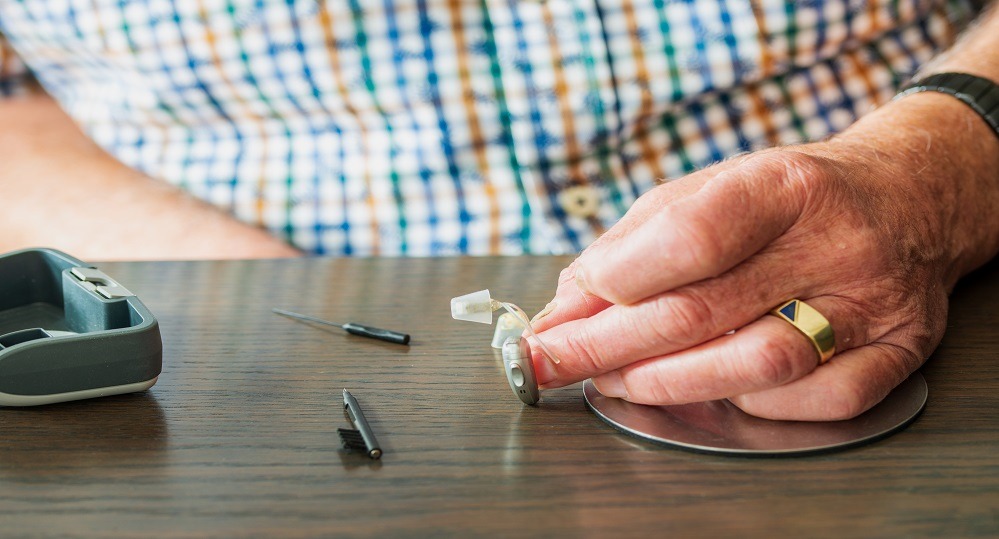
This invention addresses a major yet often overlooked issue in hearing healthcare: earwax buildup, the leading cause of hearing device malfunction and poor sound clarity. Earwax clogs receivers and earmolds, reducing sound quality, causing discomfort, and leading to costly repairs or replacements. The problem is particularly acute among elderly users, who may struggle with manual dexterity and find it difficult to clean devices properly, as well as among caregivers, who often lack reliable tools for hygienic cleaning. Current solutions-such as manual brushes or basic filters-are largely ineffective against hardened or internal wax. Moreover, some automated systems reuse cleaning fluids, and their performance can vary depending on the degree of wax accumulation, device design, or user maintenance.
This technology introduces an automated hearing aid cleaning and maintenance system that employs a multi-step process - including fluid cleaning, brushing or shaking, rinsing, and drying-combined with single-use solution and UVC disinfection to ensure safe, hygienic, and thorough cleaning. It restores near-original sound clarity, reduces the need for clinic visits, prevents device damage, and supports better ear health.
This technology offers improved convenience and longer device durability for hearing aid users, caregivers, audiology clinics, hearing aid service centers, and device manufacturers. It represents a new benchmark in hearing aid cleaning and maintenance, helping users and professionals ensure consistent hygiene and performance. To further advance and scale adoption, the technology owner is seeking R&D collaborators, application partners such as nursing homes for real-world validation, B2C partners for commercialization and bundling, and adopters beyond healthcare who can apply it as a cleaning platform or service.
TECHNOLOGY FEATURES & SPECIFICATIONS
This technology combines fluid dynamics, controlled agitation, disinfection, and drying in a compact, user-friendly system for hearing aids and earmolds of various types and materials. It effectively removes both surface and embedded earwax—whether soft or hardened—ensuring thorough and reliable cleaning.
Key Features
- Multi-Step Cleaning Cycle: Soaking, mechanical agitation, rinsing, and drying, offering superior effectiveness against hardened and internal wax compared with competitor products.
- Dual-Chamber Cleaning: Independent left and right chambers prevent cross-contamination, addressing a common limitation of single-chamber systems.
- Dual-Cycle Modes: Choice of a full clean or a quick dehumidify-plus-disinfection cycle, saving time while maintaining hygiene.
- Single-Use Cleaning Fluid: Disposable cleaning solution with a separate rinse tank ensures fresh cleaning every cycle and eliminates wax recontamination.
- UV-C Disinfection: Integrated medical-grade UV-C light adds an extra layer of microbial protection.
- Elderly-Friendly Design: One-button operation, a simple interface, and an ergonomic design optimized for ease of use in daily routines.
POTENTIAL APPLICATIONS
With its initial application in hearing healthcare, the underlying technology also has cross-industry relevance wherever miniature and delicate devices are susceptible to wax, dirt, or microbial contamination.
Primary Industry – Hearing Healthcare:
Cleaning receiver-in-canal (RIC), behind-the-ear (BTE), and custom hearing aids, where earwax remains the leading cause of device failure.
Adjacent Industries and Applications – Consumer Electronics:
Earbuds, AirPods, and other in-ear devices that face similar contamination challenges.
Unique Value Proposition
The system offers several advantages that set it apart from existing solutions:
- Fully Automatic Operation: Users only need to press the start button; the system runs autonomously and alerts the user once cleaning is complete.
- Integrated Cleaning Platform: A proprietary system that combines dual-chamber cleaning with a 2-in-1 mode offering both a full cycle and a shortened dehumidification/disinfection cycle. Competing products typically offer only a full cycle, which is more time-consuming.
- Proprietary Cleaning Solution: Single-use, hygienic cleaning fluid with rinse tanks designed to prevent recontamination.
- Validated Performance: The prototype has been tested in laboratory conditions with over 500 successful hearing aid cleaning cycles and has begun initial clinical validation with a partner clinic.

Immersive Extended Reality Simulation Ecosystem for Healthcare Education and Clinical Competency Training
Non-invasive Blood Glucose Evaluation And Monitoring Technology
Sterilised Xanthones Nanoemulgels For Wound Healing
AI-Assisted Walking Cane for the Elderly and Mobility-Impaired Users
Topical Burn Treatment Using TMD Nanosheets with Multi-Functional Therapeutic Effects
Arm Booster – Smart, Affordable Technology for Upper-Limb Recovery
On-Skin EMG Sensing for Smart Robotic Control and Immersive Haptics
3D-Printed Titanium Keratoprosthesis: A Toothless Solution for Severe Corneal Blindness
Advanced Flexible Sensor for Accurate, Drift-Free Motion Tracking