AI-Enabled Food Waste Contamination Audit System
KEY INFORMATION
Waste Management & Recycling - Automation & Productivity Enhancement Systems
TECHNOLOGY OVERVIEW
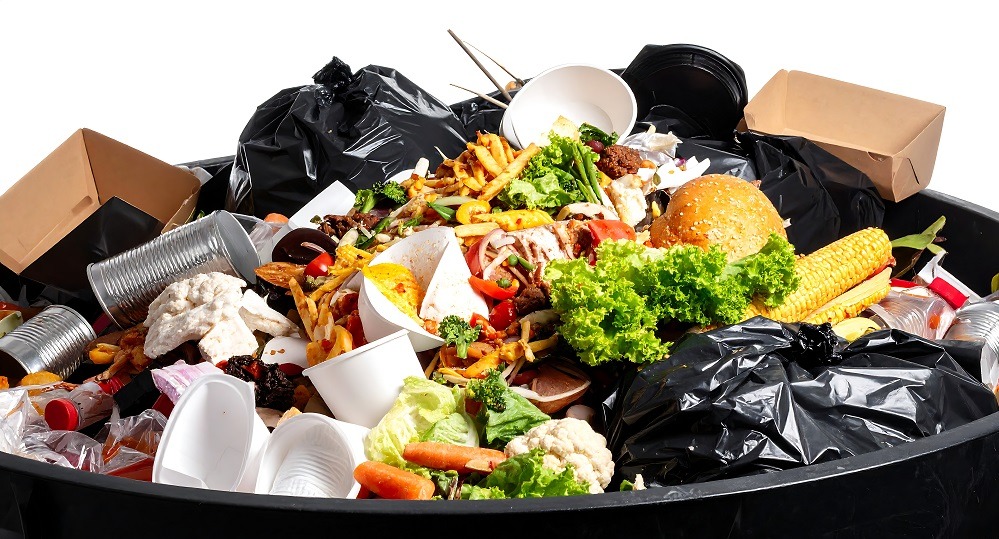
Food waste streams are frequently contaminated by packaging, utensils, and other non-food items, undermining efficient downstream treatment and resource recovery. Contamination drives multiple pain points for food operators, premise owners and municipalities such as rejected loads and surcharges, lower conversion yields at valorisation facilities, equipment fouling and downtime, higher manual-sorting labour, and unnecessary transport emissions when contaminated loads are hauled before being discarded. This technology aims to address the issues with food contamination by delivering continuous, at-source contamination auditing and monitoring.
The technology on offer is a smart food‑waste monitoring and profiling platform designed to bridge the gap between regulatory requirements and on‑site practices. By integrating AI‑enabled image analysis, weight measurement and a waste taxonomy, the system delivers real‑time contamination detection and detailed waste profiling. Together, these elements form a scalable, cost‑efficient solution that empowers food operators and premise owners to improve segregation quality, comply with evolving regulations and enhance the feedstock quality for downstream resource recovery.
The technology owner would like to collaborate with operators of multi-user food environments—such as hawker centres, food courts, and shopping malls—where at-source contamination is a primary challenge, to pilot the system, improve segregation, reduce contamination, and demonstrate measurable progress toward sustainability goals.
TECHNOLOGY FEATURES & SPECIFICATIONS
The technology is a smart food waste monitoring and profiling system that uses AI-enabled image analysis and a centralized informatics platform.
Key features of the solution include:
- Enables real-time monitoring of segregation quality across multiple sites
- Taxonomy system to standardise classification of food waste across diverse commercial operations, developed specifically to address the operational diversity of Singapore’s food sector
- Real-time user interface that provides on-site feedback to corporate user, encouraging compliance and accountability
- Centralised backend dashboard that aggregates waste data, generates performance insights, and supports regulatory reporting
- An NFC scanning feature that allow tenants to tag their waste before disposal, enabling tenant-level tracking and accountability for more detailed performance insights
- Multiple source specific tracking and placement of small footprint machine to acquire tenant-level real-time data
POTENTIAL APPLICATIONS
Potential applications include (but are not limited to):
- Public and community food centres (e.g., hawker centres, markets, canteens) — At-source auditing at dish-return/disposal points to improve segregation and reduce contamination
- Central kitchens and catering — Back-of-house monitoring to separate packaging from prep waste and reduce contamination
- Property owners, malls and mixed-use developments — Tenant-level tracking and scorecards to drive green-lease KPIs and reduce rejected loads
- Valorisation plants — Inbound feedstock quality assurance to improve conversion efficiency and minimise rejects
Market Trends & Opportunities
Global and local regulations—including Singapore’s Resource Sustainability Act—are accelerating demand for effective food-waste segregation. In parallel, operators are adopting digital tools to meet ESG reporting and circular-economy goals. While AI solutions are mature in single-operator hospitality settings (e.g., restaurants, hotels), a gap persists in multi-user environments—such as hawker centres and food courts—where at-source contamination is the primary barrier to recovery and tenant-level accountability is essential. This technology closes that gap by enabling accurate segregation, compliance, and performance tracking in complex, shared spaces. It supports Singapore’s Zero Waste Masterplan and creates opportunities to scale across urban food ecosystems in Asia facing similar regulatory and operational pressures.
Unique Value Proposition
- Combines real-time contamination detection, a standardised food-waste taxonomy, and tenant-level accountability in a single platform
- Profiles food waste at the point of disposal and tracks and logs performance for tenants and operators, using classifications tuned to Singapore’s food sector
- Improves segregation and reduces contamination, demonstrating measurable progress toward sustainability and compliance goals.

AI-Native Orchestration Platform for Building Operations Management
Spatial Sensing and Modelling Technology
AI-Driven Contract Lifecycle & Document Management Platform
AI-Powered Low-Code Generative AI Application Platform
AI-Enabled Robotic Fingers with Tactile Intelligence for Adaptive Manipulation
AI-Powered Tactile Intelligence Platform for Back Injury Prevention
Adsorption Heat Pump (AHP): Cooling from Low-Temperature Waste Heat with Less Electricity
Transforming Agricultural Waste into High-Purity Silica and Carbon Materials
AMCAM for AI Future Skills in Advanced Manufacturing