Functional Film Integration in Lightweight Recycled Plastic Composites
KEY INFORMATION
TECHNOLOGY OVERVIEW
The global plastic waste problem is intensifying, with over 480 billion PET bottles produced each year and recycling rates in Singapore at just 4%. The majority end up in landfills or incinerators, driving CO₂ emissions and environmental damage. Current recycling approaches often degrade material quality, preventing recycled PET from being used in higher-value applications. This not only worsens the waste crisis but also limits progress toward a circular economy.
This technology tackles the issue with a low-temperature embedment process that integrates functional films directly into lightweight rPET composites. By avoiding high heat and adhesives, it preserves the integrity of both the PET base and the embedded components — ensuring long-term durability and performance. The outcome is a new class of multi-functional, high-performance composites that deliver structural strength while supporting additional functions, from energy generation to protective coatings. As a result, these solutions demonstrate how recycled plastic composites can achieve advanced functionality without compromising strength or quality. Importantly, the design also allows for straightforward separation and recycling at end-of-life, closing the loop on material use and supporting the wider adoption of recycled plastic composites in sustainable manufacturing.
The technology owner is looking to collaborate with industrial partners in sectors like renewable energy (e.g., wind turbine blades) and high-performance building applications. These companies can integrate advanced functionalities into their products while dramatically improving their sustainability profile. We are actively seeking R&D co-development partnerships to expand product portfolios and create new applications.
TECHNOLOGY FEATURES & SPECIFICATIONS
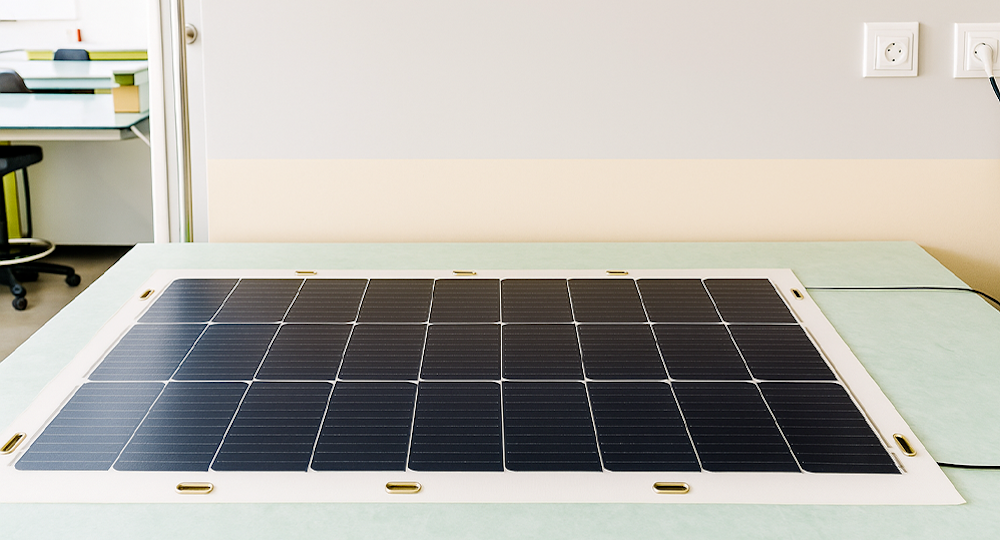
This technology applies a low-temperature process to upcycle post-consumer PET waste into multi-functional structural materials by directly embedding functional films, such as photovoltaic solar cells, into recycled PET foam. Unlike conventional composite manufacturing methods that rely on high-temperature lamination, adhesives, or multi-step assemblies, this approach significantly reduces the risks of thermal degradation, chemical migration, and mechanical stress.
The resulting rPET composite is both durable and efficient, retaining its mechanical strength while supporting the performance of the embedded functional components. By integrating structure and function in a single manufacturing step, the process eliminates the need for additional material layers and simplifies fabrication, enhancing overall production efficiency.
Designed with circularity in mind, the technology also enables easy separation of the embedded films at the end of a product’s life cycle. This feature ensures effective material recovery and recycling, further supporting sustainability goals. In addition, the process achieves up to 37% fewer CO₂ emissions compared to virgin PET production methods, contributing to a lower environmental footprint.
Overall, this technology combines enhanced recyclability, simplified processing, and multi-functionality without compromising material performance. Its scalable nature makes it suitable for a broad range of structural and functional applications in industries that are seeking to reduce environmental impact and improve material efficiency.
POTENTIAL APPLICATIONS
This technology enables the fabrication of advanced, multi-functional structural materials by embedding functional films (e.g., solar cells) into recycled PET (rPET) foam. It supports sustainable innovation by combining recycled content with value-added features such as energy generation, sensor integration, and environmental resilience.
Primary Application Area:
- Urban infrastructure in Singapore includes public amenities that require durable, energy-efficient, and environmentally friendly materials.
Key Applications and Markets:
- Self-illuminating walkway shelters: Standalone solar-powered shelters reduce reliance on grid electricity, enhance nighttime visibility, and promote safety in public spaces.
- Smart building materials: Lightweight wall panels, facades, or ceilings with embedded renewable energy or sensing capabilities.
- Consumer and lifestyle products: Furniture, signage, or durable goods with integrated lighting or interactive features.
- Sustainable packaging and logistics: The versatility of the rPET material with embedded films could extend to developing sustainable, biodegradable, or smart packaging solutions with integrated sensors or indicators.
Unique Value Proposition
This technology preserves the structural integrity of recycled PET while allowing embedded functional components to perform at their full capacity — a clear step forward compared to traditional methods that rely on adhesives, high-temperature processing, or multiple assembly stages.
For users, the value is twofold: sustainability and efficiency. Carbon emissions are cut by up to 37% compared to virgin PET production, while end-of-life design enables easy separation and recycling of all components. This supports circular economy goals and reduces environmental impact without compromising performance. At the same time, the process streamlines manufacturing by removing the need for adhesives and complex layering, which lowers production costs and minimises waste.
The result is a versatile class of materials that combine load-bearing strength with embedded functionality — whether energy harvesting, sensing, or other advanced features. This opens new opportunities for innovative product designs that deliver both performance and sustainability.

Adsorption Heat Pump (AHP): Cooling from Low-Temperature Waste Heat with Less Electricity
Transforming Agricultural Waste into High-Purity Silica and Carbon Materials
Plant-based Additive for Bioplastic Barrier Enhancement
Transforming Agricultural By-Products into Sustainable Materials
AI-Enabled Food Waste Contamination Audit System
AI-Powered Circular Economy Platform for Smart Recycling
Optimisation of Shrimp (L. Vannamei) Feed with Underutilised Okara
Formulation and Optimisation of Fish (O. niloticus) Feed from Food Waste Protein Source
Advanced Bamboo-based Composite Technology